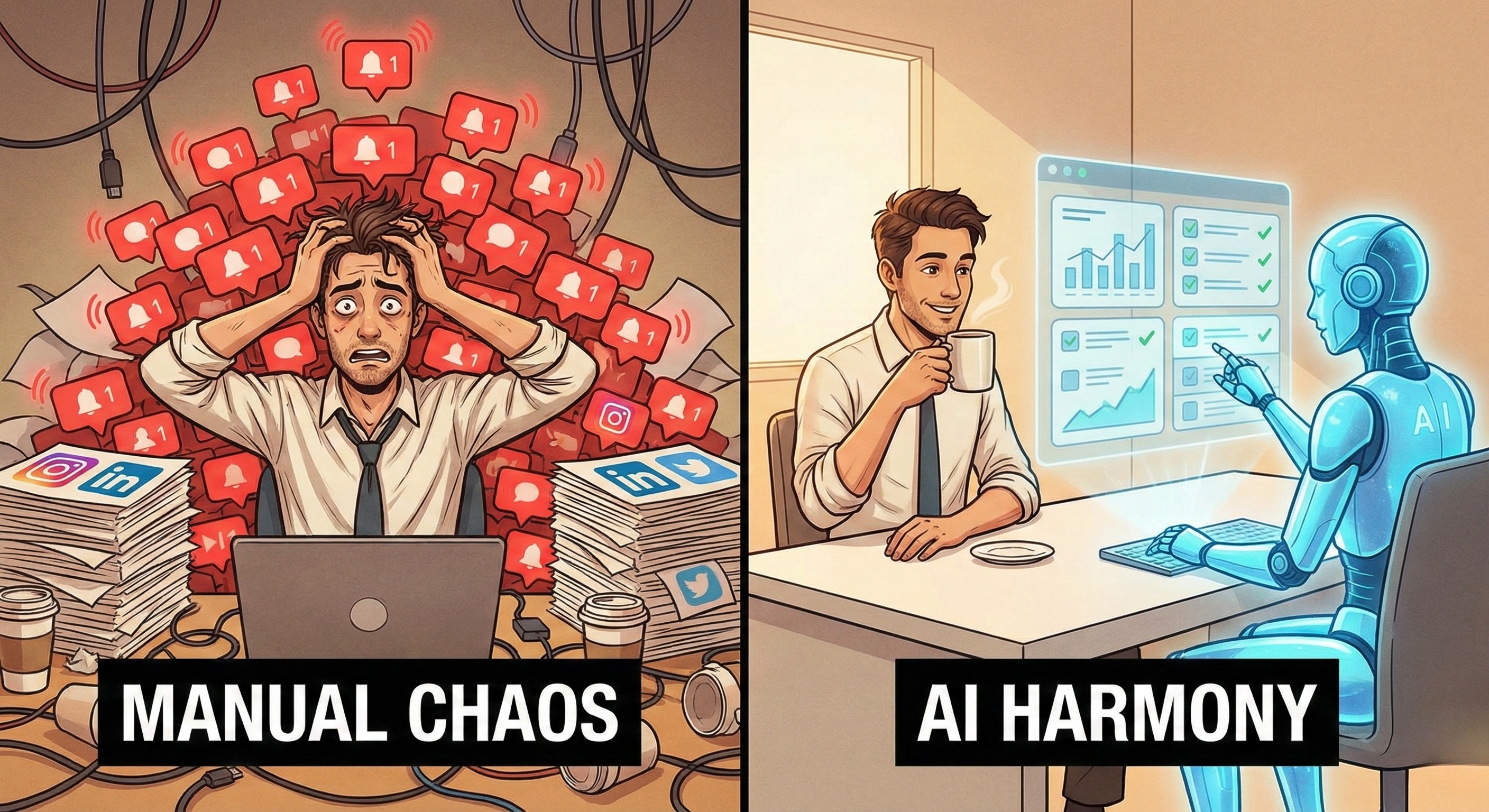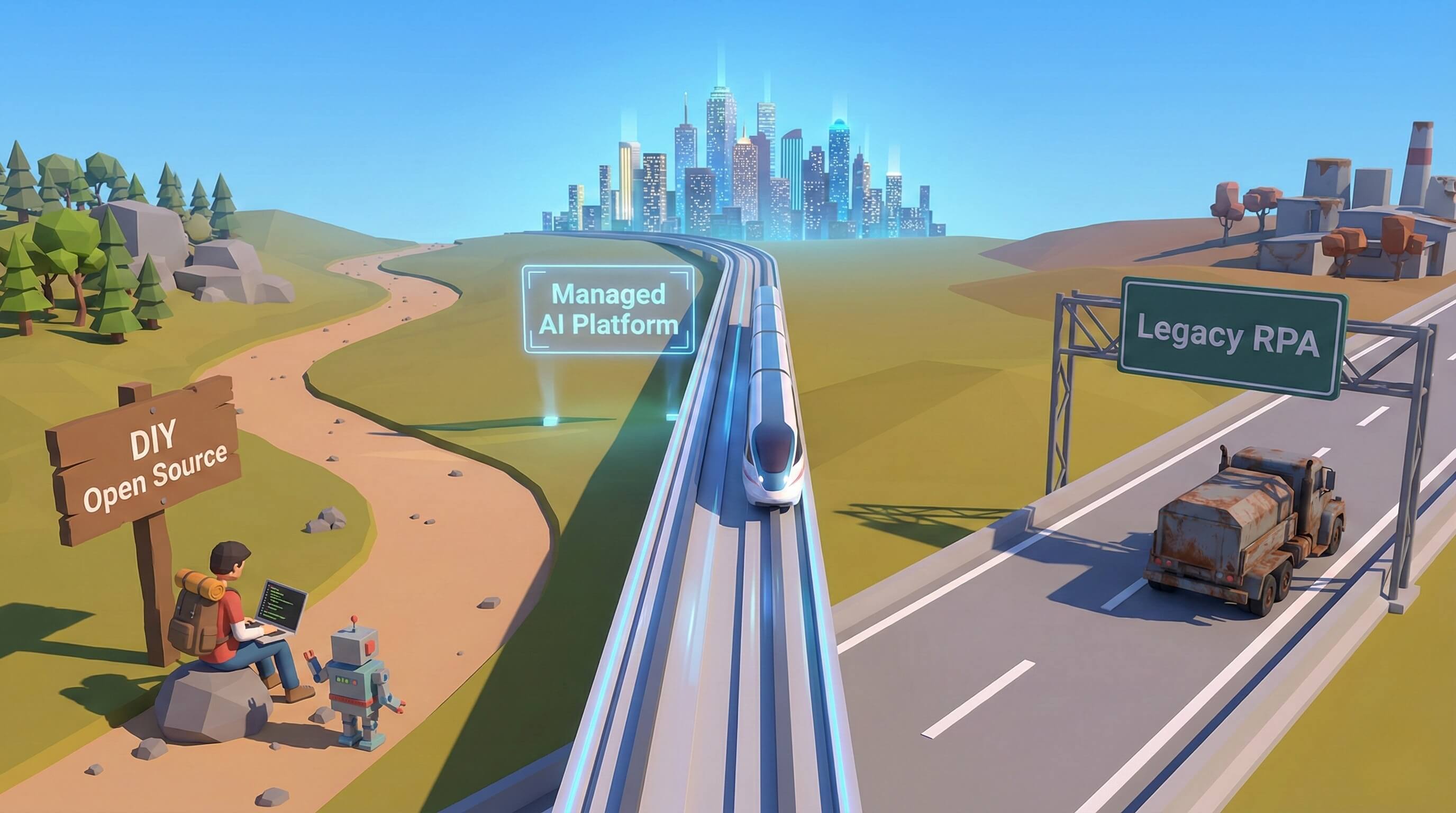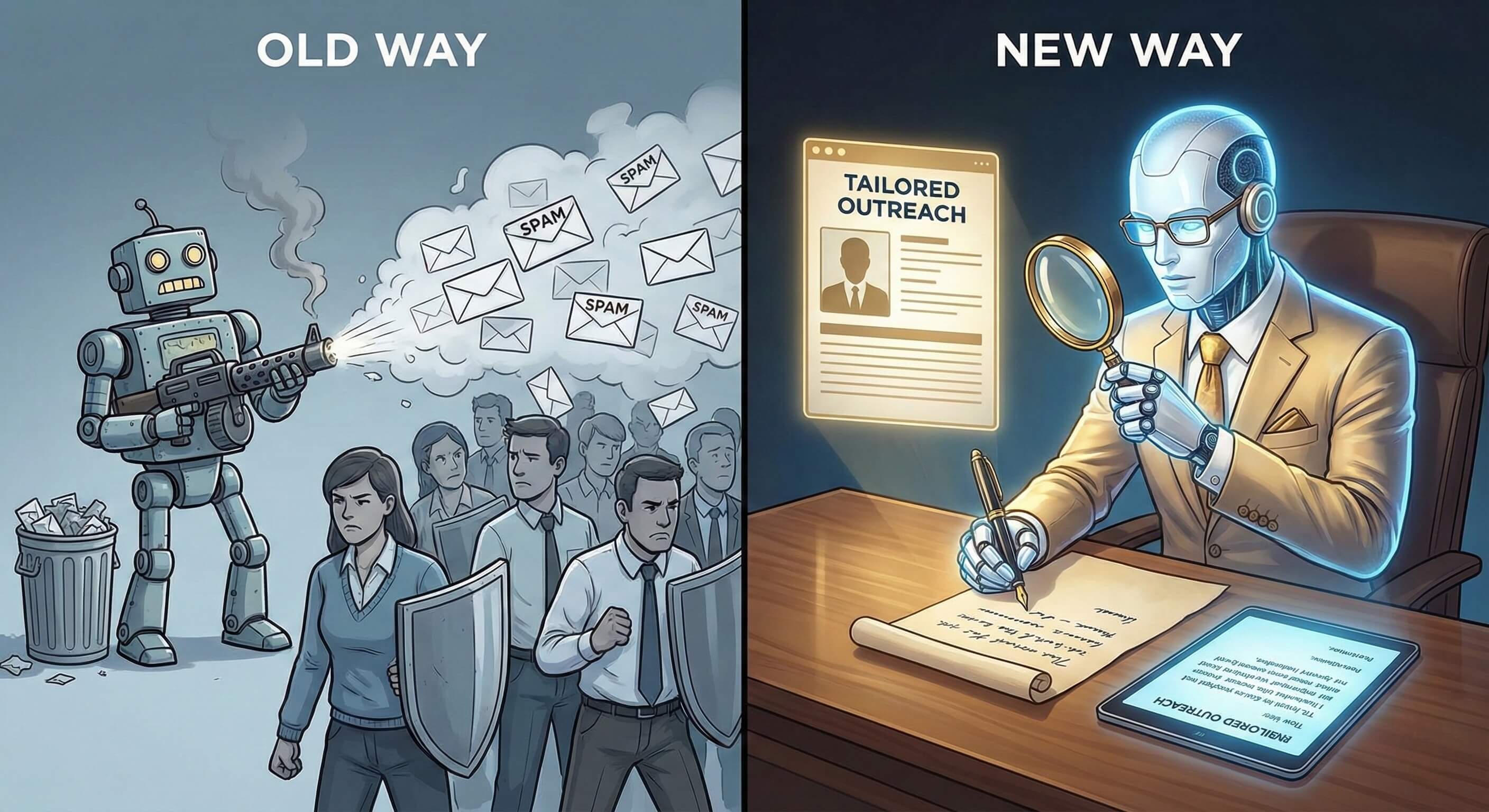

If you raised a Series A, the first thing you did was hire 20 people. You hired SDRs to find leads, Marketing Assistants to post content, and Ops Managers to update CRMs.
But in 2026, this "Army of Humans" model is becoming a liability.
-
Burn Rate: Humans are expensive (Salaries, Benefits, Equipment).
-
Onboarding Lag: It takes 3 months to ramp up a new hire.
-
Management Overhead: More people means more meetings, more middle management, and more complexity.
High-growth startups are now adopting a leaner, faster model: The Hybrid Workforce.
They are scaling their operations not by hiring more junior staff, but by deploying AI Employees (Autonomous Agents) to handle execution, while their human talent focuses on strategy.
But managing an AI workforce is different from managing a software tool. You don't just "install" an AI Employee; you have to Hire, Onboard, and Manage them.
This guide outlines the best practices for Founders and COOs on how to integrate AI Workers into your org chart without creating chaos.
Part 1: The Mindset Shift
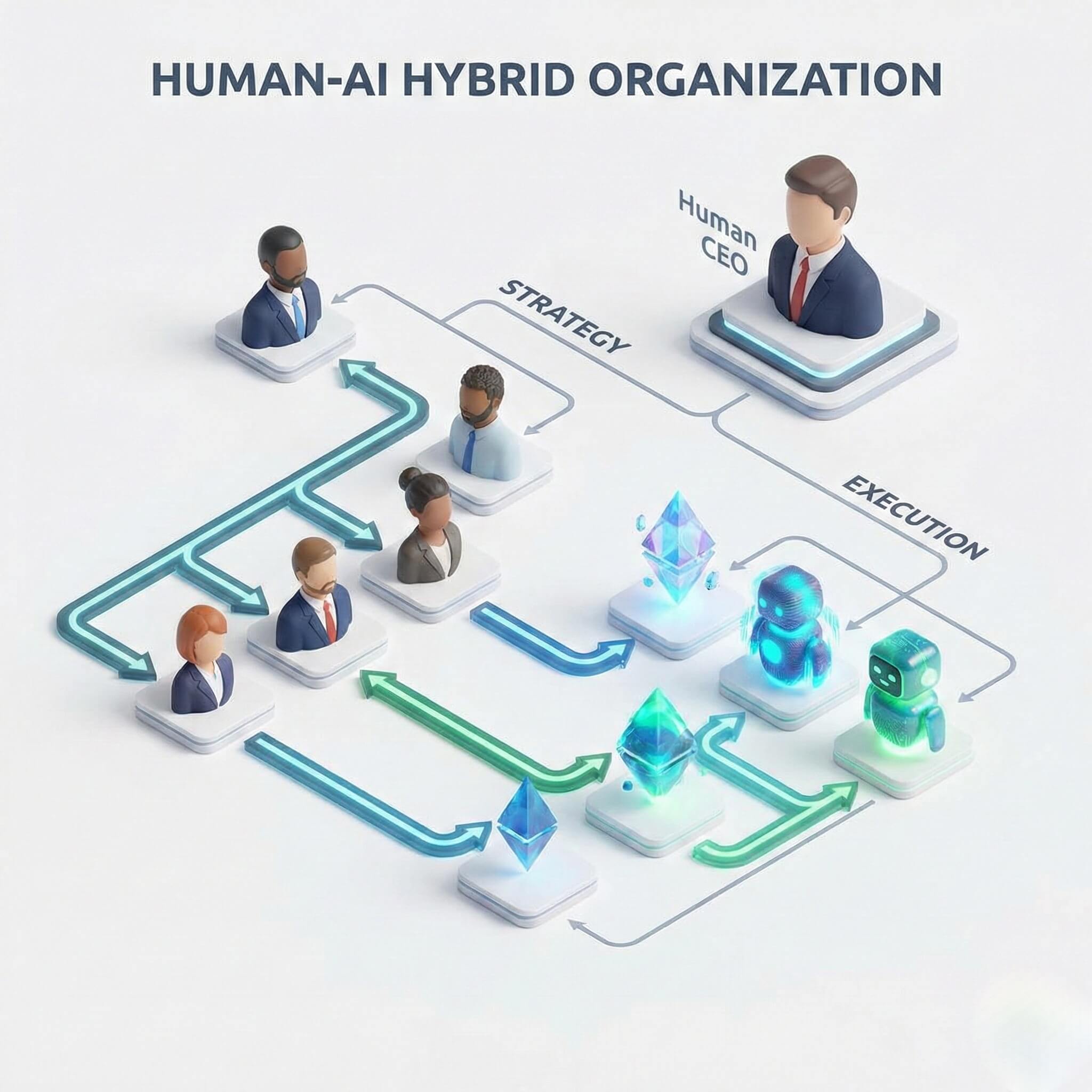
From "User" to "Manager"
The biggest mistake startups make is treating AI Agents like "Tools."
-
The Tool Mindset: "I will use this software to send emails." (You are still the doer).
-
The Manager Mindset: "I will assign the 'Outbound Role' to this AI Agent and review its performance weekly." (You are the orchestrator).
To succeed with Promoi, you must treat your AI Agents as Junior Employees.
-
They need clear instructions (SOPs).
-
They need access to resources (Knowledge Base).
-
They need boundaries (Guardrails).
-
They need feedback (Optimization).
The Golden Rule: If you wouldn't give a vague instruction to a human intern, don't give it to an AI Agent.
Part 2: Recruitment & Onboarding
Setting Your AI Up for Success
Just as you have an onboarding process for humans, you need one for AI. Here is the AI Onboarding Framework:
Step 1: Define the Role (The Job Description)
Don't try to make one AI Agent do everything. Specialization is key.
-
Bad: "Do marketing."
-
Good: "Role: LinkedIn SDR. Goal: Identify Series A Founders in Fintech. Territory: North America. Daily Capacity: 20 outreaches."
Step 2: The "Brain Download" (Knowledge Ingestion)
Your AI needs to know who you are. Upload your company's core documents into Promoi’s Knowledge Base:
-
Brand Voice Guide: Is your tone witty, corporate, or empathetic?
-
Product Cheat Sheet: Features, benefits, and pricing.
-
Objection Handling Script: How do we answer "It's too expensive"?
Step 3: Operational Guardrails (The Compliance Layer)
Startups move fast, but you cannot break things. Set hard limits.
-
Rate Limits: "Never send more than 30 messages per day per account."
-
Negative Sentiment Stop: "If a prospect replies with 'Unsubscribe' or 'Not interested', tag them as 'Lost' and stop all contact immediately."
-
Blacklist: "Never contact current customers or competitors (upload domain list)."
Part 3: Daily Orchestration

The "Human-in-the-Loop" Workflow
You wouldn't let a new hire email your biggest clients on Day 1 without checking their draft. The same applies to AI.
Phase 1: The Review Queue (Training Wheels)
For the first 2 weeks, run your AI Agents in "Draft Mode."
-
The AI researches and writes the message.
-
It places it in a "Review Queue."
-
A human manager spends 15 minutes each morning approving or editing the drafts.
-
Why? The AI learns from your edits. If you consistently change "Best regards" to "Cheers," it updates its internal style guide.
Phase 2: Autonomous Execution (The Hand-Off)
Once the AI reaches a 95% approval rate, switch it to "Autonomous Mode." Now, the human manager only reviews Outcomes (e.g., booked meetings) rather than Outputs (e.g., messages sent).
Phase 3: Handling Escalations
AI Agents are great at opening doors, but humans are better at closing deals. Configure "Triggers" for hand-offs:
-
Trigger: Prospect asks a complex technical question.
-
Action: AI tags the conversation as "Needs Human" and alerts the Senior AE on Slack.
Part 4: Managing Scale and Security
Avoiding "Shadow AI"
As your startup grows, different teams will want to deploy their own agents. Without governance, this leads to "Shadow AI"—unmonitored bots running wild.
1. Centralized Identity Management (RBAC)
Use Role-Based Access Control.
-
The CMO has full admin rights to create new agents.
-
The SDR can only view the logs of their assigned agent.
-
This prevents junior staff from accidentally changing the core prompt instructions of a high-performing agent.
2. The "Secure Workspace" Standard
Ensure every AI Employee operates in a Secure Browser Sandbox.
-
Never run agents on local laptops. It’s a security risk and limits scalability.
-
By using Promoi’s Cloud Mobile infrastructure, you ensure that if an employee leaves the company, they don't take the AI's "session data" or "cookies" with them. The digital employee stays with the company.
3. Audit Trails
Maintain a log of every action. If a platform flags an account or a customer complains, you need to be able to look back and see exactly what the AI did, said, and saw. Promoi provides comprehensive Execution Logs for this exact purpose.
Part 5: Comparison: Humans vs. AI vs. Agencies
|
Dimension |
Human Junior Staff |
Traditional Agency |
AI Employee (Promoi) |
|---|---|---|---|
|
Cost |
High ($50k+/yr) |
Medium ($3k+/mo retainer) |
Low (SaaS Subscription) |
|
Ramp Time |
3 Months |
2-4 Weeks |
< 24 Hours |
|
Availability |
40 hours/week |
Business hours |
24/7/365 |
|
Scalability |
Linear (Hire more) |
Negotiate new contract |
Elastic (Instant) |
|
Management |
High (1:1s, Career Growth) |
High (Weekly Syncs) |
Low (SOP Optimization) |
|
Creativity |
High (Strategy) |
Medium |
Low (Execution) |
|
Best For |
Strategy, Closing, Relationships |
Specialized Projects |
Repetitive Execution (Top of Funnel) |
Part 6: Common Pitfalls to Avoid
Even smart startups fail at AI management. Here are the top 3 traps:
-
Trap 1: "Set and Forget"
-
The Mistake: Turning on an AI Agent and checking back in a month.
-
The Fix: Treat it like a garden. Review performance metrics weekly. Interfaces change, markets shift, and messaging fatigues. You need to tweak the instructions regularly.
-
-
Trap 2: Over-Automation
-
The Mistake: Trying to automate the entire sales process, including the closing call.
-
The Fix: AI opens; Humans close. Use AI for research and qualification. Use humans for trust and negotiation.
-
-
Trap 3: Ignoring Platform Nuance
-
The Mistake: Using the same "Hard Sell" script on LinkedIn that you use on Email.
-
The Fix: Customize the "Persona" for each channel. Your LinkedIn Agent should be conversational. Your Email Agent can be more direct.
-
FAQ: Management Logistics
-
Q: How many AI Agents can one human manager handle?
-
A: We typically see a ratio of 1:50. One human operations manager can effectively orchestrate 50 AI Agents, provided the workflows are set up correctly. This represents a massive leverage on human capital.
-
-
Q: How do we measure the performance of an AI Employee?
-
A: Use the same KPIs you use for humans: Qualified Leads Generated, Response Rate, Cost Per Acquisition. Don't measure "vanity metrics" like number of messages sent; measure business impact.
-
-
Q: Can I "fire" an AI Employee?
-
A: Yes. If a campaign isn't working or a market dries up, you simply deactivate the agent (or re-assign it to a new role). There is no severance package, no HR meeting, and no hard feelings.
-
Conclusion: The Leanest Unicorn
The next billion-dollar company will have 100 employees, but they will do the work of 1,000.
By mastering the art of Managing AI Employees, you build an organization that is decoupled from linear headcount growth. You become faster, leaner, and more resilient than your competitors who are still trying to hire their way out of execution problems.
Stop drowning in operational noise. Start orchestrating your digital workforce.